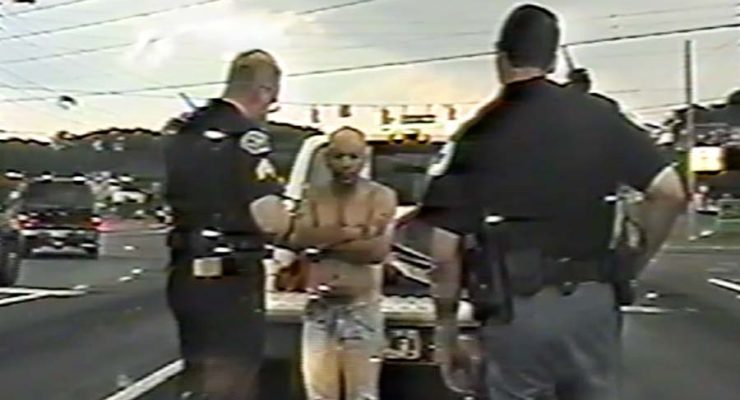
Stop and frisk is frequently taught as the same thing, but they are not. In Terry v. Ohio, the Supreme Court laid out two different aspects of an investigative detention and what the requirements were for each. ”Stopping” is the first aspect, and “frisking” is the second aspect.
In today’s police training video, I go over what the courts have said regarding the frisk, or pat down for weapons. I also touch on the requirements for “plain feel” as originally described in Minnesota v. Dickerson.
Resources:
- Terry v. Ohio (stop and frisk)
- Minnesota v. Dickerson (plain feel)
- The Three Tiers of Police-Citizen Encounters
Related posts:


Hey Richard, very interesting to learn about the legal standard for frisking from a practical standpoint! The reasonable suspicion standard seems very… reasonable. Definitely something built up around context and experience like you described. Also I did not know about the plain feel test – also interesting. Thanks for the informative video, I always enjoy the wide variety of topics that you guys cover.
Hi Richard,
Sorry, but reading Minnesota v Dickerson I understand it differently from you.
In fact, SCOTUS confirmed that both the stop and the frisk were valid but the officer went beyond the scope of the search.
“the court concluded, the officer determined that the lump was contraband only after ‘squeezing, sliding and otherwise manipulating the contents of the defendant’s pocket’—a pocket which the officer already knew contained no weapon.”
Thanks for doing the video. You are correct in all other aspects. Sorry, I am not trying to be an ass; just striving for accuracy.
Pappy
Thanks Richard and Pappy!
These new instructional videos are outstanding. I was thinking that Minnesota v. Dickerson had more to do with how the officer frisked rather than what he stopped and frisked for.
This is great review. I’ve been noticing some officers getting sloppy in their frisks. I’m not talking about missing areas, but exactly what Richard and this case are talking about. I’ve seen pockets squeezed, opened up to “peek” in, and objects manipulated. I think some have thought that a frisk of that nature is OK as long as they don’t stick their hands into the pockets. I plan on doing roll call training tomorrow to emphasize this important topic.
Another interesting thing from Terry v. Ohio is that the courts ruled that only the “outer” clothing was subject to frisk – reasoning that a suspect would have to manipulate the outer clothing to retrieve a weapon from inner pockets or clothing.
I wish the courts would realize that crooks are good at being crooks! The only thing necessary to access inner clothing is to remove the pocket liner of the outer clothing – something that is frequently done by those who are armed, or those who deal drugs, or those who steal, or …..
However, many officers need to realize that they have a very powerful tool for successful searches with them at all times – their mouth. Often times, if you use proper interview techniques, you can throw a suspect so far off his game that you can pop in a request to search pockets or have them open coats, etc., and gain compliance before they realize what they’re doing.
Hi Aaron,
Thx for the response. I would like to make sure you understand that courts have allowed officers to go beyond the “outer clothing” when conducting a Pat Frisk. The following is from the Alameda County District Attorney’s office in California. They publish the “Point of View” every quarter and have documents available on their web site.
“In addition, officers may reach inside a detainee’s clothing or lift up his outer clothing
without first pat searching him if he was wearing clothing that was so bulky or rigid that
a pat down would not have revealed the presence of a weapon. As the court noted in
People v. William V., ‘In light of William’s bulky clothes, [the officer] reasonably lifted
[his] jacket to search his waistband.’”
Take care,
Pappy
Pappy,
Great information. Do you know if that is a Supreme Court interpretation or just California? It would make sense that if the outer clothing is so bulky to render the frisk of no value, that an officer could at least lift or remove that garment. I just want to make sure we don’t run into cross-jurisdictional issues.
Thanks,
Aaron