Spree killers – more often, but less accurately, called active shooters – are a real threat that police officers train to confront. Active shooter incidents have occurred at shopping malls, office buildings, and other locations, but one of the scariest locations is at a school.
Many police departments have trained in, or at least familiarized their officers with, the schools in their jurisdictions. This is invaluable experience; the first time you set foot inside the school better not be when bullets are flying.
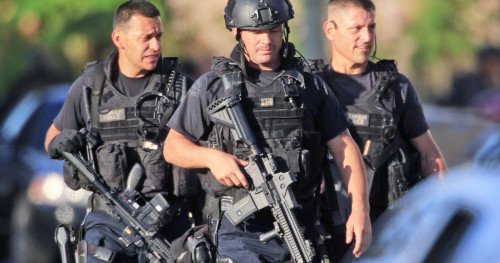
Even though schools generally cooperate with law enforcement by allowing them access for training, are we really working with the schools to achieve the best possible response to the unthinkable act of someone killing our children?
Locked doors are one example of what we may be missing if we are not working closely together with the schools.
The first thing a school does if trouble erupts is to go into “lockdown.” Not terribly different from a lockdown at a jail, students are hustled into their classrooms, and the doors are locked. The idea is to isolate the children from the problem. In this case, the active shooter.
There are two problems with the lockdown. First, it hampers the ability of the victims to escape if trouble finds them anyway. Essentially, the children are held in small areas waiting for the killer to arrive. It is not a nice thing to think about, but our children would be better off fighting than cowering in a corner.
Secondly, a lockdown hampers the ability of law enforcement to respond to the incident. This is separate from the fist problem of children being herded into locations to wait for evil to find them.
The second issue resulting from a lockdown is something that many officers have not trained for. If three officers show up, form a contact team, but can’t get in through a locked door, what good are they? And before you say “break out a window and crawl through,” how many of your schools use wire-reinforced glass to prevent someone from doing just that?
Patrol officers need to have some tools available to make entry through locked doors: both exterior and interior. Additionally, the officers need to know how to use them. A Halligan tool is great, but if you don’t know how to use it, what good is it?
Lastly, officers engaged in active shooter scenarios need to encounter locked doors, so they can train how to work them. Because, God forbid, if they need to go after an active shooter in real life, they will encounter some locked doors.
The best thing a department can do is to have the SWAT team work with officers to show them the easiest way to defeat common door locks should they be encountered. Then the department needs to provide the officers with the tools to do so.
If a department can’t afford to equip every patrol car with a full set of tools, perhaps having three or four sets spread throughout the shift will at least increase the likelihood of someone responding with the tools needed to save lives.
Tools used by patrol do not need to be the fancy SWAT tools that a specialized team might need. In my squad, I carried these:
- a Stanley sledge hammer
- a Stanley FuBar (crowbar)
- heavy duty bolt cutters
Stay safe!