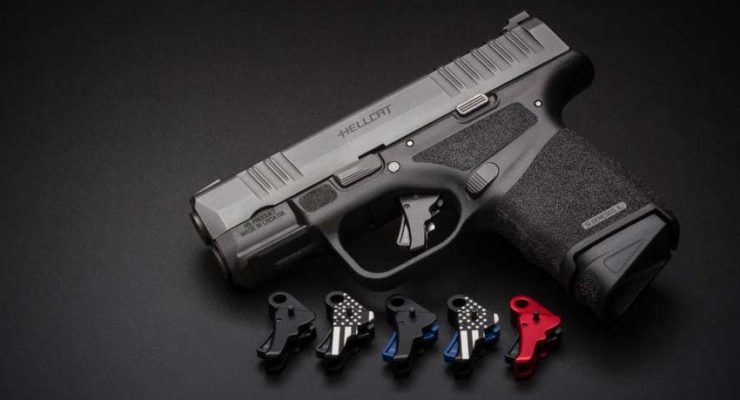
SIG SAUER wants to express their appreciation to individual officers, military, and first responders for their service to our country, both foreign and domestic. As a small token of appreciation, SIG SAUER will be offering a special rebate program on new SIG SAUER pistols and rifles. This offer is available to all first responders, active and retired law enforcement officers, active duty, retired military with a retired military ID, and active reservist military personnel. Recently discharged military personnel are eligible to purchase a firearm up to 90 days from date of separation. Rebate forms for the Individual Officer Program can be downloaded at www.sigsauer.com.
Offer applies to the firearms listed below. Firearm must be purchased between January 1, 2008 and December 31, 2008 (does not apply to previous purchases).
$100 Rebate applies to the following models - P220®, P226TM, P229®, 1911, SIG556TM, SSG 3000, Blaser Tactical 2
$50 Rebate applies to the following models - P239TM, P250TM, SP2022®.
This offer applies to purchases made through authorized dealers only and does not apply to the 2008 P220R3 Carry C.O.P.S. Edition model, P232TM model, Certified Pre-owned models, or Mosquito® pistols. All requests for rebates must be postmarked by December 31, 2008 to be assured reimbursement. Offer void where prohibited.
To inquire about the SIG SAUER Individual Officer Purchase Program email carol.bradanini@sigsauer.com or call (603) 686-5657.
Tags: Firearms
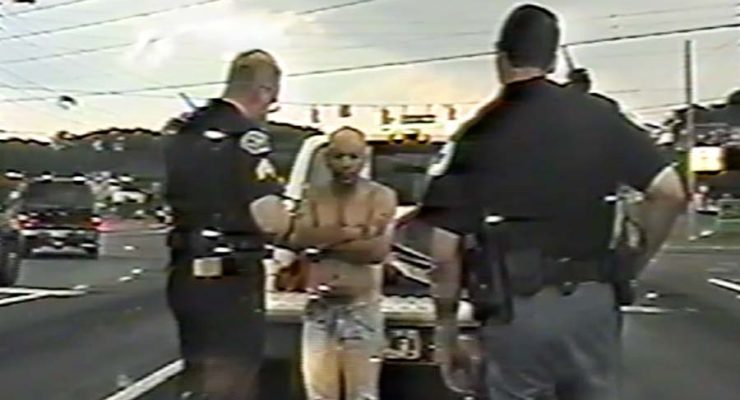
I stopped a woman for an expired tag. I soon arrested her for Driving While Suspended/Revoked as her history of poor driving makes it a felony for her to operate a motor vehicle. So, I am sitting there waiting for a tow truck to show up for the car, when a subject (here-after referred to as ‘dude’) walks up.
Dude asks “Do you work around here?” I point to the flashing lights on my patrol car and say “Yep. It’s not just a hobby.” Dude says “Good. My girlfriend, Donna, has a warrant. She won’t turn herself in. Would you arrest her?”
Now I’m thinking “That’s love.” So I say, “Sure where is she?” Dude points vaguely toward a nearby trailer park that is in the county’s jurisdiction. I explain to Dude that the trailer park is in the county, but I can have a deputy meet him at their abode.
Dude gets quiet as he appears to mull over my offer. After several minutes, he looks up at me and says he will be right back. Dude leaves and I figure he’s had enough interaction with the police for one night.
About five minutes later, I am typing away on my computer terminal and I see this woman walking past my patrol car. I am thinking “No…It can’t be.” On the other side of the parking lot I see Dude making some not-so-sly head movements toward her in an obvious attempt to get me to stop her.
I ask the woman “Are you Donna?” The woman stops and says “Yeah, why?” I say “I heard you have a warrant.” Donna, who is nervous, gives me her information. Much to my disappointment, Donna was not wanted. Donna wanders off.
Once Donna is out of sight, Dude slides up to my car wanting to know why I didn’t arrest her. I say “Well, she’s not wanted. By the way, do YOU have any ID?”
Dude was wanted. Ah…irony.
Tags: General
Police officers have enjoyed the use of the Taser X26 (and the effective M26 before that) as an excellent intermediate force option that allows the quick incapacitation of an offender while minimize the chance of harm to the suspect and officers involved. Tasers tend to be effective where pain compliance techniques are not.
However, Tasers are not 100% reliable. For the Taser to work properly there has to be a completed circuit with electricity flowing through a wide section of muscle mass. The failure of a Taser to effectively work can happen if only one probe hits the suspect, or the probes land too close together, or there is a faulty battery, or thick clothes do not allow the probes to get close to the skin. I’ve seen Tasers fail to incapacitate in each of these situations. The point is: the X26 is effective but not 100%.
There is an understandable reluctance by police officers to use deadly force. Cops are not evil people and they do not want to harm or kill anyone. So, many times when a police officer faces a situation in which deadly force is the appropriate level of force, the officer may hesitate or seek some other lower level of force, which generally decreases their own safety. While in some respects this is admirable, the fact is the officer must survive and win the encounter, not just for his or her own well being, but for the community as a whole. For if the officer is incapacitated or killed due to their attempt at a lower force option, their killer is now free to harm other innocents…perhaps even with the officers own weapons.
If a police officer encounters a suspect armed with a deadly weapon, the officer’s appropriate response will be deadly force, not a Taser. A suicidal subject armed with a knife or a gun needs to see the business end of your AR, shotgun, or pistol…not the blast doors of a ‘green’ X26 cartridge. If you have appropriate deadly force cover (say your two zone partners are in a position of advantage covering the suspect with .223 rifles), then you might –in certain circumstances– attempt to use a Taser to subdue the suspect. The idea is that your backup can employ deadly force should the Taser attempt go wrong.
Keep in mind that the vast majority of us have Taser cartridges that are good to a maximum of 21′ or 25′. Perhaps 21′ sounds familiar? That distance should be known to all police officers as it relates to the Tueller Drill. The Tueller Drill was developed by Sgt. Dennis Tueller of the Salt Lake City PD. Sgt. Tueller discovered that an average person could cover 21′ and begin stabbing an officer in 1.5 seconds: the same amount of time an officer could draw his weapon and put a round on the threat. That, of course, does not take into account that a fatal shot is not likely to instantly stop the attack.
So, if you encounter a violent subject armed with an edged weapon AND you have lethal force cover AND you want to try to use a Taser, you better hope it works. If it doesn’t, you will likely have a subject on top of you in less than two seconds. Your partners better be very accurate and very quick. Even then you stand a pretty decent shot at getting hurt.
If the subject has a firearm, you don’t even have 1.5 seconds, as they just have to point and pull the trigger.
So, read your department SOP’s, know your state laws of the use of force, and work out plans with your zone partners before you encounter a deadly force situation in which you may want to try a Taser.
Tags: TASER · Edged Weapons · EDP · Drugs · Officer Safety · Firearms Training
Gould & Goodrich has added a Taser Holster/Cuff Case combination to its product line to make the most efficient use of available space on duty belts. The product is offered in Hi-Ride Cross Draw, Swivel Cross Draw, or Strong Side Use and is available in K-Force (black, waterproof polymer laminate with a choice of black, black basketweave or hi-gloss Porvair finish) and Phoenix Advantage-Plus Nylon (genuine ballistic nylon that resists moisture, mildew, scratches and tears).The Taser Holster/Cuff Case combo requires only the space on the belt that is normally used by the cuff case alone. This frees up space on the belt, which can then be used for other accessories.
“We’re very pleased to offer Law Enforcement Professionals options that increase the ability to carry their equipment conveniently and comfortably,” said Robert Gould, President of Gould & Goodrich. “In addition to the stocked items in our catalog, we specialize in creating custom products for Law Enforcement, Government and Military agencies.”
Tags: Gear and Holsters
Police officers receive a lot of training in vehicle pursuits, yet most cops get very little training in foot pursuits. The reason comes down to lawsuits.
If an officer initiates a vehicle pursuit and subsequently the suspect or officer strike an uninvolved citizen, the officer’s city will be facing an expensive lawsuit. If the same officer engages in a foot pursuit, there is a significantly smaller chance for the criminal or officer to seriously hurt or kill someone by running into them. Hence, significantly fewer lawsuits.
However, the city’s perceived “danger” should not be your perception as well. Every year, police officers are murdered when engaging in foot pursuits. Take the murder of Cleveland Police Officer Derek Owens who was shot during a foot pursuit on February 29. Owens and his partner chased several suspicious men who fled on their arrival. While being chased, one of the men produced a handgun, turned, and shot Officer Owens.
K-9 officers are especially vulnerable in a pursuit. K-9 officers frequently are chasing suspects, and probably find themselves more vulnerable than most patrol officers. Deputy Sheriff Matt Williams and his canine partner Diogi were murdered on September 28, 2006 when they gave chase after a man who had fled on foot from a traffic stop in Polk County, Florida.
So, what are some of the things you can do to make a safer pursuit?
- Don’t Push A Bad Position - If the suspect has gotten out of sight, slow down. If you have the units available, set up a perimeter and get K-9 enroute to assist with a track.
- Negotiate Corners Safely - If the suspect turns a corner, slow down and carefully negotiate the corner. Swing wide, slicing the pie as you go. Yes, this takes time, and the suspect may use the extra time to get away, but running headlong into an ambush is a fatal mistake.
- Anticipate Trouble - Sometimes just showing up will cause your suspect to flee. However, if you are already in contact with your suspect, pay attention to the body language he is displaying. If your suspect is thinking about running, he will typically telegraph his intentions in his non-verbal communication. Even if you miss some of the cues, your partner should pick up on the signals if the two of you are using Contact and Cover techniques.
- Stay Physically Fit - If you catch the suspect, you have to be fit enough to effect the arrest. If you are at the point of exhaustion when you catch the suspect, how can you handcuff or fight him?
Stay Safe!
Tags: Officer Safety
The Ghost Hawk Neck Knife offered for sale by GG&G is a concealable knife of an unusual shape and design. The knife weighs a mere 1.65 ounces and comes with a Kydex sheath for wearing around the neck. The knife, which is only 0.1″ thick, could easily be concealed under a t-shirt, sweater, or sweat shirt.
Like any weapon, the Ghost Hawk Neck Knife could be carried by both the good guys and the bad guys. A lot of you probably already carry some type of knife around your neck or on your vest already. When doing searches, just keep in mind that your suspect can carry weapons in these places also. Too often, I have seen veteran officers search the waist bands and pockets very well, but practically ignore the neck, chest, and back.

Tags: Disguised Weapons · Officer Safety
The nature of excited delirium is debated among medical professionals and police trainers. Whatever its causes, and no matter what we call it, excited delirium exists, and it is dangerous.
A person who is in a state of excited delirium is clearly a threat to the officers and others, but they are also in danger from themselves. Oftentimes in-custody deaths are related to a suspect being in a state of excited delirium.
The best bet for an officer to avoid an in-custody death related to excited delirium, is to recognize the symptoms and summon emergency medical assistance when you encounter it.
Some of the symptoms attributed to excited delirium as identified by the Street Survival seminar are:
- profuse sweating
- paranoia
- aggression toward objects (especially glass)
- disrobing
- running
- yelling
- hiding
- hallucinating (especially that bugs are crawling on them)
- seizure
- thrashing before/after restraint
Keep in mind that someone with these symptoms may not be in a state of excited delirium, but it is far better to have EMS respond and clear the subject, than to have him or her die in your back seat.
Stay safe!
Tags: EDP · Officer Safety
If-Then thinking is a simple visualization technique that you can employ to help yourself win a violent confrontation. The concept is relatively simple. Any time you have a free minute, think about IF something bad happened THEN you would respond in this way.
For example, you are pulling through a closed shopping center. You might start thinking “IF I saw a window that was broken in, THEN I would…” Stop and look around. Maybe there is a good cover location you didn’t notice when you first pulled in. How would you direct other units to you? What would you do if suddenly an armed man came out of the business. Think through possible scenarios and your actions you would take to win the confrontation.
I often find myself doing this just prior to a traffic stop. Just before pulling a car, I often start thinking about who and what I see in the car, what could happen when I hit my lights, and what the occupants may do. In just a few seconds, I can run through a number of possible actions the occupants may take and how I will handle them.
Dave Spaulding, a retired police lieutenant and long-time trainer, wrote an article called “What Really Happens in a Gunfight?” Spaulding interviewed a lot of gunfight survivors over the years and pieced together some common factors. One of the factors he found was that people who used visualization were prepared to take action, and were able to do so with little lag time. Basically, instead of thinking “I can’t believe this is happening,” people who had used visualization already had a programmed response and were taking action without having to take time to analyze everything.
Some of the concrete benefits of If-Then thinking include:
- shortened response time
- you are far less likely to freeze when confronted with violence
- you tend to be more alert and more likely to use proper tactics
- less likely to under- or over-react
Stay Safe!
Tags: Officer Safety
County officials along the U.S./Mexico border say the cost of apprehending, arresting and convicting undocumented immigrants is crippling their courts and the region’s entire criminal justice system. In a report released by the U.S. / Mexico Border Counties Coalition (USMBCC), elected county leaders argue they are well past the national debate on immigration reform, and simply want to be reimbursed for the burden illegal immigration places upon their criminal justice systems, to the tune of about $200 million a year.
“It’s all about the criminal justice costs associated with criminal aliens,” says Kent Evans, Immediate Past President of the USMBCC and a Dona Ana County (NM) Commissioner. “Any way you look at it, border counties spent more than one billion dollars in less than a decade. That’s a lot of money, money that should have been used to improve schools, roads and public safety in our communities.”
In the study, conducted over a 12-month period by the University of Arizona and San Diego State University, it was revealed that the 24 border counties in Arizona, Texas, California and New Mexico are spending a disproportionate amount of local tax dollars to provide law enforcement and criminal justice services to apprehend, transport and convict criminal undocumented immigrants.
“This updated study effectively illustrates that until our borders are secure and our immigration laws are adequately enforced, many states and localities, particularly in border states like Arizona, will continue to incur overwhelming costs to process those illegal immigrants who commit crimes, or who, sadly, die trying to come to the United States,” said Sen. Jon Kyl, R-Ariz., who secured funding to produce the report.
“This study underscores the unfair and unacceptable fact that border residents continue to pay for our broken immigration policies,” said Congressman Silvestre Reyes, D-El Paso, TX, a 26 1/2 year veteran of the U.S. Border Patrol. “The current approach reflects a lack of understanding of border communities.”
The Coalition asked that the federal government cover three major costs associated with undocumented immigrants who commit state felonies and/or multiple misdemeanors by fully funding the State Criminal Alien Assistance Program (SCAAP), the Southwest Border Prosecution Initiative and county law enforcement and criminal justice services. “We are not asking for a hand out,” said Manny Ruiz, Vice Chairman of the USMBCC and a Santa Cruz County (AZ) Supervisor. When federal lawmakers fail to secure our borders, our local taxpayers should not have to pay for the skyrocketing costs.”
The Coalition is a nonpartisan, consensus-based policy and technical forum founded in 1998 to address challenges facing county governments located on the United States/Mexico Border. For a copy of the 155-page report, visit www.bordercounties.org.
Tags: Terrorism · Drugs · General
In one of the sillier explanations for crime, the Urban Institute has announced that the surge in robberies is the result of Apple’s iPod
.
Yes, that’s right, the ever-popular iPod is being blamed by this Washington think-tank for single-handedly pushing robbery stats up after years of declining incidents.
I, like Apple, have no comment.
Read the story here.
.
Tags: General
Since 1960, the National Rifle Association has supported law enforcement by providing firearms instruction to officers and training new firearms instructors through its Law Enforcement Activities Division (LEAD). To date, more than 50,000 instructors have been trained by the NRA.
In 2007, the NRA trained 2061 law enforcement instructors, a new record. 2007 was the sixth straight year the NRA has topped itself in the number of law enforcement trainers they have trained.
“Every year, the NRA is proud to say that we have helped keep the public safe by providing state-of-the-art training to law enforcement instructors,” said Kayne Robinson in the March 2008 issue of America’s First Freedom. Robinson is the executive director of NRA general operations.
NRA instructor schools are listed here.
Tags: Firearms Training
Ever been wrestling around with someone, trying to get handcuffs on them, but for some reason the cuffs are slippery? Yeah, me too. Maybe it is blood, mud, sweat or rain, but it seems when you need them the most, handcuffs can become slippery little things.
Hiatt-Thompson has introduced a new product designed to eliminate slippery handcuffs: the GETTAGRIP. The GETTAGRIP is a high tack decal that permanently bonds to the exterior of your handcuffs creating a very positive gripping surface.
Made from polyurethane, Hiatt states the decals will never harden and are resistant to marring, staining, bleach, ammonia, and even hydrochloric acid. Normal cleaning is standard soap and water.
Hiatt-Thompson offers them for sale through their website for $9.95. I’ve already ordered some for myself.
Tags: Gear and Holsters
February 26th, 2008 · 1 Comment
Field Training and Evaluation Programs (FTEP) are the foundations that police agencies use to build quality, career police officers. When a recruit officer is teamed up with motivated, knowledgeable field training officers, that recruit stands a very good chance of becoming a motivated, knowledgeable officer also.
The often overlooked benefit of a quality FTEP program is the high morale displayed by the FTOs will rub off on the recruit. Believe it or not, recruits who are exposed to positive, motivated FTOs, are more likely to stay with that agency for their career.
So what happens if the recruit officer is paired with FTOs that have low morale? Recruit officers normally emulate the behaviors displayed by their mentors and FTOs. The recruit wants to fit in and be part of the team. If everyone else is complaining, they are likely to pick up that attitude. A poor attitude translates to an officer who makes bad cases, gets more internal affairs complaints, and is more likely to leave for another agency.
I’ve seen the real benefits of a positive FTEP. Unfortunately, I have also seen the results of a FTEP with bad morale. It ain’t purty, fellas.
There can be a lot of different reasons why FTOs can develop poor morale and bad attitudes. It can come from administrative issues, improper selection of FTOs, or poor leadership in the FTEP itself. However, one issue I have seen time and time again –that never seems to be addressed– is plain old burn-out.
Sometimes a department is hiring so many new officers that an FTO always has a recruit in the car. A lot of times, the best FTOs get the worst recruits. The same FTOs often get recruits that are in remedial training; recruits that need extra help to do the job or find the door.
All FTOs can get burned-out. The best FTOs tend to be abused and do get burned-out.
With burn-out comes poor attitude and low morale. From there, the quality of training declines sharply, and suddenly the best FTOs are providing sub-standard training. All FTOs deserve down-time. Field training officers need time without recruits to clear their heads and re-focus their own police skills.
My own department is having some morale problems in the field training program. Some of it is a leadership issue. However, most of it is they are just plain tired. Most of the FTOs have been hammered for 18+ months with no significant down time between recruits. Most of the training officers are still in the program only because of the extra pay, not because they still want to do it.
If you are having morale problems in your FTEP, take a look at your FTOs. Are they just burned-out? Would a rest let some of them recharge?
To give FTOs a quality rest between recruits, the program may have to increase the number of officers that are assigned to it. I know some police administrators will claim they cannot afford to expand the training program. But, knowing the benefits a quality program can provide, can they afford not to expand the program?
Stay safe!
Tags: Field Training
If you have been on the job for very long at all, you will have discovered that seemingly ‘routine’ traffic stops can go bad in a heartbeat.
The driver I stopped the other day for a minor tag violation had his child’s lunch box in the car with him. Only this little girl’s lunch box held a .38 Special revolver. Fortunately, his behavior prior to the stop tipped me off that something might not be quite right, and I was able to safely conduct the stop.
Last week I was getting ready to stop a car for a minor violation when I was dispatched to another call. So rather than stopping the car, I went and handled the dispatched call. For whatever reason, I clearly recalled some pretty specific details about the car. The next day we got a BOLO from a neighboring agency about that same exact car…that had just conducted a drive by shooting.
These are just two of many examples of minor traffic infractions that could have turned into a deadly force situation very quickly. I’m sure most of you could tell your own stories like these. Keep in mind that there is nothing routine about a traffic stop. You don’t know who, or what, is in the car.
Stay vigilant and stay safe!
Tags: Traffic Stops · Officer Safety
February 24th, 2008 · 1 Comment
I’ll stay away from the geo-political issues surrounding the debate of illegal immigration and stick to just what I know: illegal immigration is …well… illegal. At some point, the laws may change, but for now there are a lot of people who are in the United States illegally.
Immigrations and Customs Enforcement (ICE) agents are overworked, understaffed, and at the political whims of their bosses. While the individual agents are doing the best job they can, the fact is ICE is not able to adequately enforce the immigrations laws in the USA.
What I find to be especially disturbing is that illegal immigrants who are arrested for crimes in the United States are rarely picked up or deported by ICE. I have seen people arrested for domestic violence, DUI, theft, and other crimes post a bond and walk out of the jail even though they freely admitted they were illegal immigrants.
So, local law enforcement agencies, responding to the demands of their citizens, have been picking up the slack where and when they can. A number of Sheriff’s Departments in Georgia have begun to enforce immigration laws, and the Gwinnett County Sheriff wants to be the next.
From the Atlanta Journal Constitution:
Gwinnett Sheriff: Give me more money, I’ll enforce immigration laws
Gwinnett County Sheriff Butch Conway says he will start enforcing federal immigration laws by deporting illegal immigrants housed at the jail if the county commission gives him enough money to hire 18 more deputies.
Conway says he would be willing to join a U.S. Immigrations and Customs Enforcement program that trains deputies to begin deportation proceedings for undocumented immigrants.
The sheriff had been engaged in a public spat with Commission Chairman Charles Bannister in recent weeks over whether joining the program was feasible.
“It seems that the chairman is willing to fund it, and I’m certainly willing to go forward with it,” Conway said. “But he’s got to put his money where his mouth is.”
About 39,000 people are booked into the Gwinnett County Detention Center each year, more than 12,000 of whom are foreign-born, Conway said. It’s unclear how many of the foreign-born inmates are in the country illegally.
Immigration is a hot-button issue this year, and both men are up for re-election in November.
Bannister prodded the sheriff to “get with the program” last month and commit to putting deputies through the federal training. Bannister issued a press release saying he will propose a resolution at next Tuesday’s commission meeting urging the sheriff to take action.
Bannister could not be reached for comment Wednesday.
“It’s a pretty common-sense measure that I think will gain a lot of support, especially with the sheriff’s renewed interest in it,” said Jeremy Brand, Bannister’s campaign manager.
Georgia law only requires jails to check residency status of foreign-born inmates charged with a felony or driving under the influence. The ICE program trains deputies to check the residency status of all foreign-born inmates, regardless of their crime.
Conway was initially skeptical about making any commitments that would require deputies to do more work. The department was already laboring under a severe staffing shortage.
Then in January, the commission approved an across-the-board pay increase for deputies of 4 to 5 percent. With better pay to entice hiring prospects, Conway hopes he can now fill most of the 40 vacancies in coming months. Conway says he looked at how the ICE program has been implemented elsewhere to determine how many additional deputies were needed to make it work in Gwinnett.
Cobb County Sheriff Neil Warren became the first sheriff in Georgia to initiate the ICE program in 2007. It has since been gaining in popularity, according to ICE spokeswoman Pat Reilly. Other in-state participants include a select group of state troopers and officers with the GBI and Department of Public Safety.
A GROWING FORCE
Number of local and state law enforcement agents trained to enforce federal immigration laws.
2005 — 27
2006 — 88
2007 — 426
Source: U.S. Immigration and Customs Enforcement
GWINNETT COUNTY JAIL
2,617: Current jail population (as of noon Wednesday)
39,223: Total number of inmates booked into the jail in 2007
12,000: Approximate number of foreign-born inmates booked into the jail in 2007
360: Number of inmates released to U.S. Immigration and Customs Enforcement for deportation in 2007
127: Number of inmates being held for ICE investigation
Tags: General