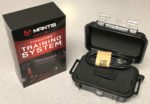
Looking for a way to vastly improve your firearms training - either as an officer or as a department? You will be very interested in this MantisX Firearms Training System review. It is a potential game-changer for both live-fire training and dry fire training. Mantis is a new firearm accessory company based out of the Chicago suburb of Oswego, Illinois. The Mantis website … [Read more...]
Winning Deadly Force Encounters
EDITOR'S NOTE: This is Part II in a series confronting the lack of proper firearms training in modern law enforcement. In Part I we covered the importance of transitioning to targets that focus the officer's shots into the key upper chest targeting areas of the heart and lungs of the adversary. In Part II we present the arguments for proper targeting, with … [Read more...]
Self-Defense Targets: Training to Win
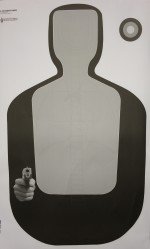
The firearms community has grown phenomenally over the last 25 years, and continues to show amazing improvements in manufacturing, innovation, and skills training to complete the experience. These advancements have helped law enforcement respond to increasingly complex critical incidents. The development of highly accurate bean bag rounds as a less lethal option, polymer … [Read more...]
Got Ammo? You Better Stock Up!

Have you checked your department's armory lately? If not, you had better convince the people in charge to start stocking up like a modern-day Prepper! How many hollow point duty rounds do you have? If you think you have enough, you might want to think again! Those agencies caught by surprise when the civilian ammunition market was choked dry during the height of the Iraq and … [Read more...]
Professional Shooters Talk Pistol Grip

Perhaps the most indicative feature of pistol shooting in relation to accuracy is the shooter's grip on the handgun. In the above video shooting professional Michael Seeklander, of Shooting Performance (as well as Personal Defense Network and Top Shot Season 1), breaks down some key fundamentals in the shooter's grip that can provide an outstanding grip and form, while … [Read more...]
Should Officers Use Their Front Sights During A Gunfight?

The Force Science Institute (FSI) is a research organization founded by Dr. Bill Lewinski, PhD. in Mancato, Minnesota. Dr. Lewinski is a 30-year clinical psychologist in human behavior who has focused his career in the area of police psychology. He created the Force Science Institute and dedicated its research to the study of human perception and reactions during dynamically … [Read more...]
7 Shooting Tips from Rob Leatham for Improved Accuracy
Did you know that an improper grip or trigger pull can throw your shots by a few inches...or even more at longer ranges? In training that might mean an embarrassing score. But, on the street that can be the difference in stopping a threat or becoming a statistic. The good news is you can improve your shooting quickly if you put your mind to it. A professional shooter … [Read more...]
Roll Call: A BSD Challenge Video!

A little over a week ago I started the Quarterly Challenge on BlueSheepDog. The intent of the challenge was to keep officers sharp on some of the most critical skills necessary to survive the streets. I haven't receive very many responses or comments so I have no idea how well the Q1 Challenge was received. There were four challenges included in the first quarter (Q1) … [Read more...]
Officers Charged in Careless Deaths

Barely two months into 2015, and we have two police officers, from different large police agencies, criminally charged for the reckless or negligent killing of another human being. Sadly, I have to agree with the criminal complaints and I'll explain. The Oath of Office When you swore the oath to become a police officer, you entered a profession with tenants that call you … [Read more...]
Universal Training Munitions (UTM)
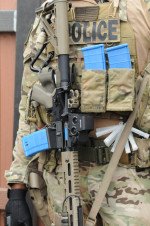
UTM RBT training kit. The officer uses his personalized rifle, with UTM bolt carrier and magazines. A few years ago, we were invited to attend a special showing of the Universal Training Munitions (UTM) while we were at SHOT Show. I'm really glad that we attended. During that UTM showing, Richard and I were able to fire both UTM rifle and pistol rounds through a converted … [Read more...]